
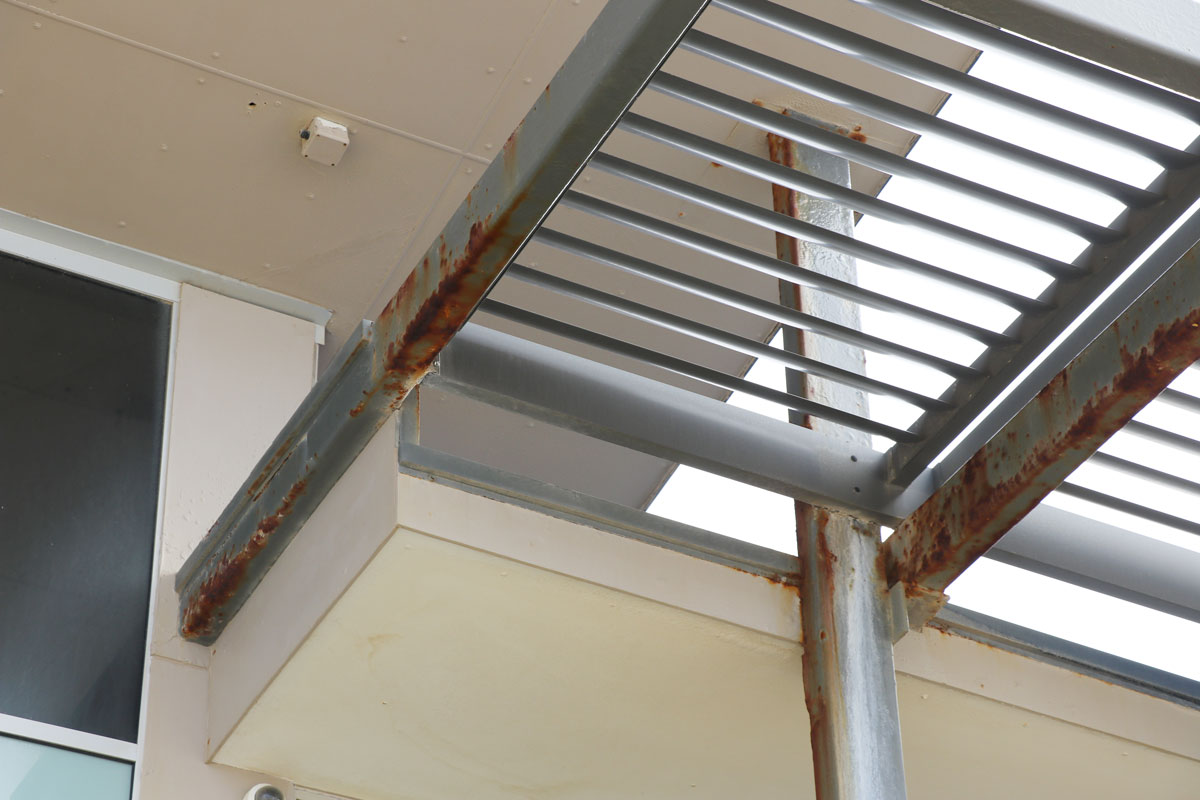
Selecting architectural metals for window shrouds, louvre screens, or AC shrouds for a building project comes down to more than the line item on a quote. The material specification, the coating system, and the fabrication quality determine what that product looks like in five years, ten years, and twenty.
At Alumac, we see the consequences of poor specification regularly. Here is what that actually looks like in practice.
Steel in a coastal environment. Every time.
We have a case study we come back to often: A prominent Sydney Surf Lifesaving Club, where steel awning brackets were cast directly into concrete during construction. Within years, the steel had corroded. The rust expanded, cracking the surrounding concrete, and what started as a structural bracket became a structural liability.
The cost to reengineer and rectify: hundreds of thousands of dollars.
The cost to specify stainless steel at the time of construction: approximately a few thousand dollars.
This is not an unusual outcome. Steel corrodes in coastal and high-humidity environments. It is a question of when, not if. Specifying mild steel in these conditions is not a cost saving. It is a deferred cost, at a much higher price.
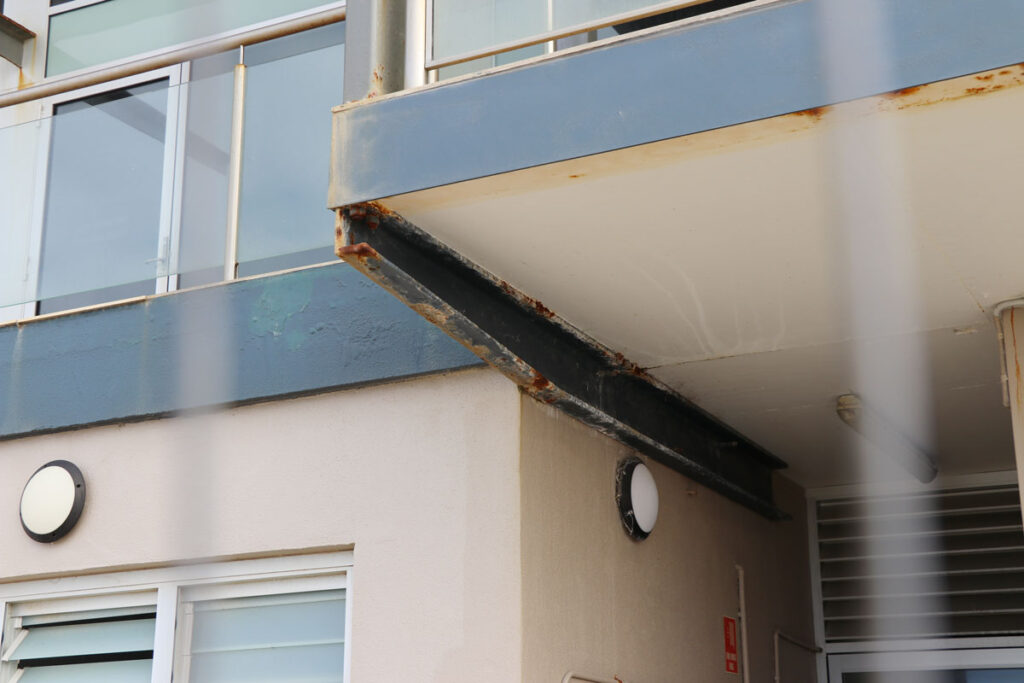
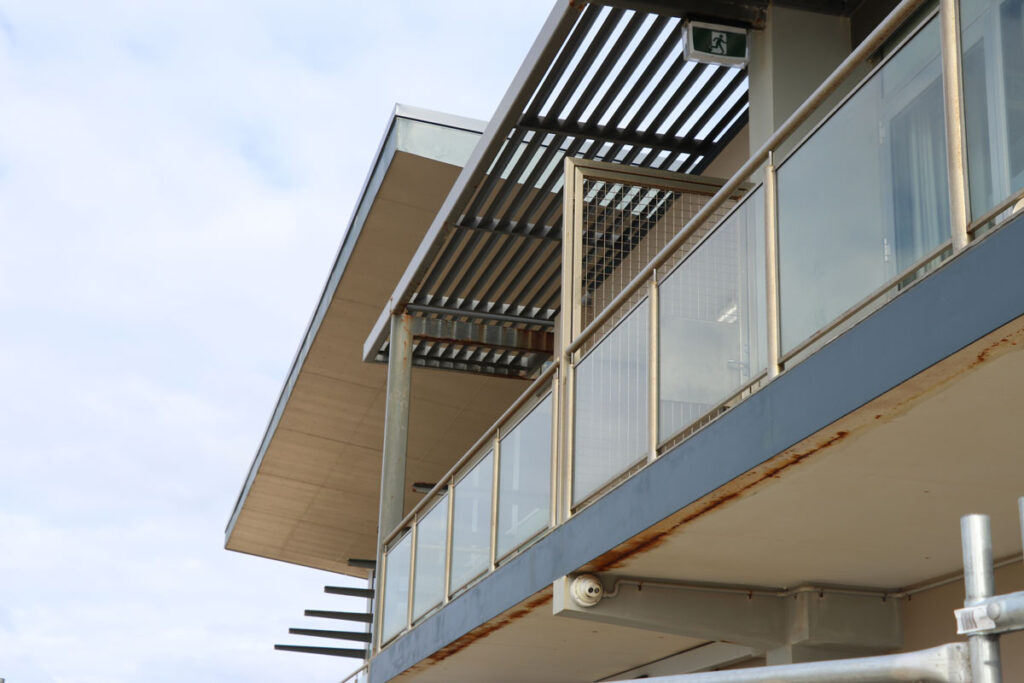
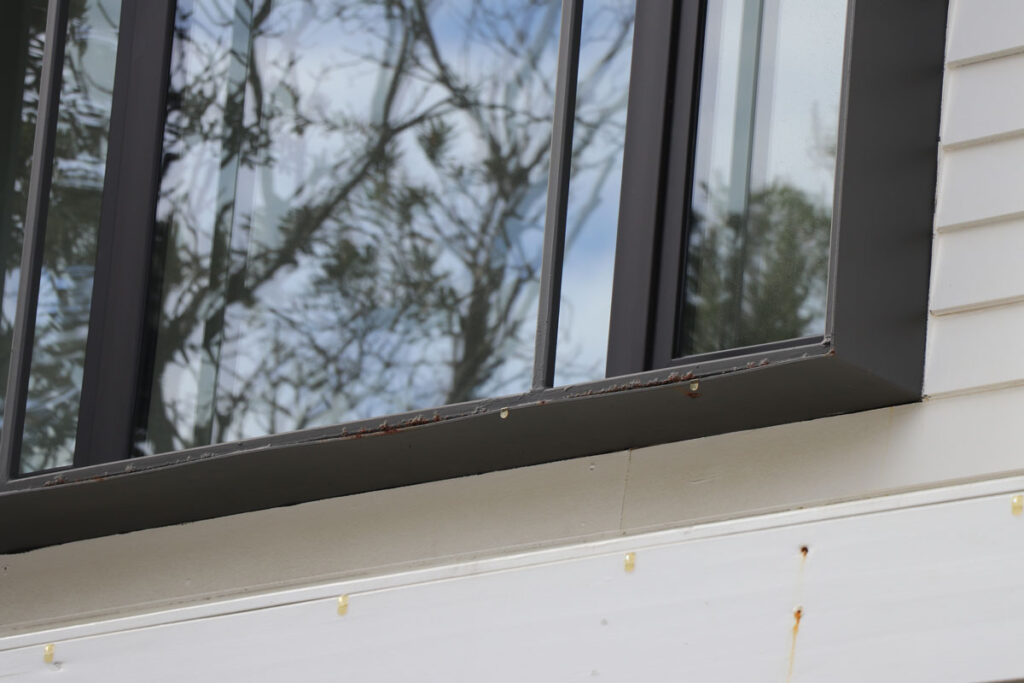
Sun hoods rusting from the inside out
We have also documented sun hoods on residential and commercial properties where cheaper mild steel components were used in the construction. The corrosion is visible, the product appearance is degraded, and the remediation requires full replacement, not maintenance.
These products were installed to improve the appearance and performance of a building. Within a few years, they became a liability.
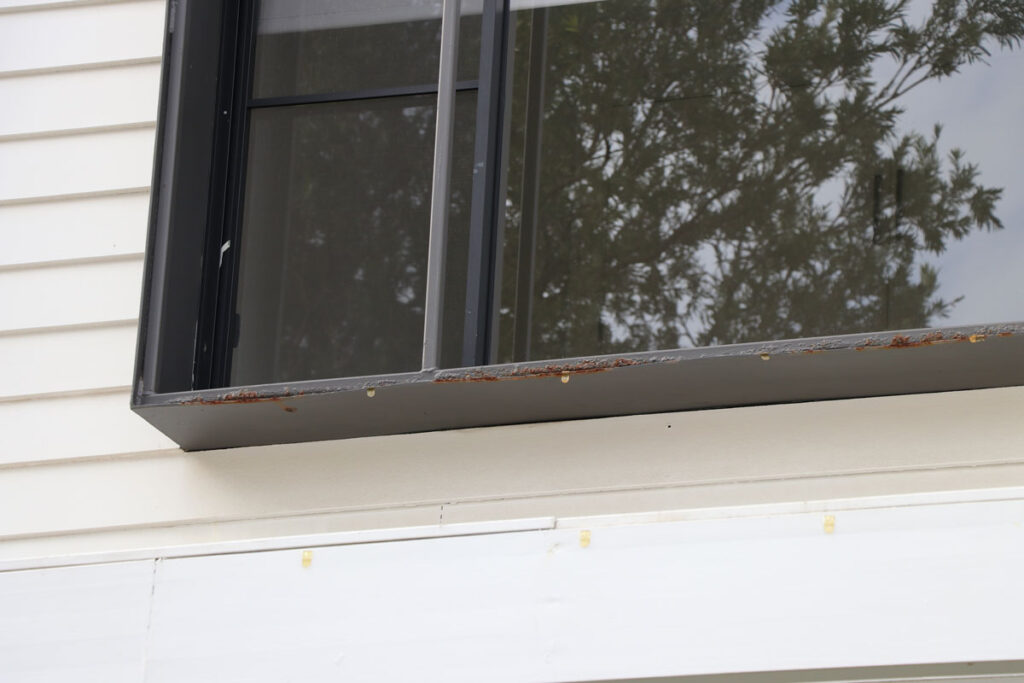
Timber: the same story
Timber architectural elements tell a familiar version of this story. Disintegration, splitting, warping, biological decay. In coastal and exposed environments, untreated or poorly specified timber fails predictably. The question is always the same: what was saved upfront, and what does replacement cost?
Not all powder coat is the same
This is one of the most misunderstood specifications in the industry.
Powder coat is not a commodity product. A low-grade powder can cost as little as $9 per kilogram. A Dulux-quality warranty grade architectural powder in the same colour costs around $36 per kilogram. The difference is UV resistance, colour retention, adhesion, and longevity, particularly in coastal and high-UV environments.
Many manufacturers apply the cheapest available powder and call it powder coated. The colour fades, chalks, or fails to adhere properly within a few years.
Pre-treatment matters just as much. Without a proper chemical pre-treatment process, powder coat cannot bond correctly to aluminium, regardless of quality. At Alumac, every product goes through a Surtec 643¹ chromate-free pre-treatment process before any coating is applied. This is what underpins our warranty. It is not a marketing claim. It is a process.
Why our products cost more
We use marine-grade and architecturally specified aluminium alloys. We apply premium Dulux architectural powder coat. We pre-treat every surface with Surtec 643. We fabricate in Sydney, which means we control quality at every step.
That comes at a cost. Our products are not the cheapest quote on the table.
But they are the product that looks the same in fifteen years as it did on installation day. And they are backed by a warranty that means something, because the process behind it is real.
What this means for builders: liability does not expire on handover day
Choosing the right materials is not just about aesthetics or longevity. It is about your exposure as a builder after the job is done.
Under NSW building legislation, statutory warranties apply to all residential building work and cannot be excluded by contract. Minor defects, including corrosion, coating failure, and surface deterioration, are covered for two years from completion. If a homeowner identifies these issues within that window, the claim comes back to the builder.
Two years passes quickly. A sun hood that starts showing rust at 18 months, or a powder coat that begins chalking and fading before the second summer, is a problem that lands on the builder’s desk, not the supplier’s.
Specifying quality materials upfront removes that exposure. When you use products with a genuine manufacturer warranty backed by a documented fabrication and coating process, you have something to stand on if a question ever arises.
For homeowners
For homeowners, the equation is simpler. Nobody wants to look at a rusted or degraded product on their home a few years after installation. Getting the specification right the first time means the product still looks the way it should years later, with no remediation, no replacement, and no dispute over who is responsible.
A note for architects and specifiers
When you write steel into a specification for a coastal or exposed environment, you are creating a problem for your client. Stainless or aluminium costs more upfront. It does not cost more over the life of the building.
Powder coat quality and pre-treatment should be part of any specification conversation with a fabricator. If a supplier cannot tell you what powder they use by brand and grade, or cannot describe their pre-treatment process, that is the answer.
Cheap products do not save money. They move the cost forward, with interest.
To talk through material and coating specifications for your next project, contact the Alumac team or call (02) 9525 2177.

Greg Wallis, Manager, Alumac Industries and Strip Drains Sydney. Greg is a skilled business management and product design professional with years of hands-on experience. Greg has designed myriad innovative metal building products that blend quality, craftsmanship and architectural products for the building and construction industry.
